
A Martinelli’s bottle can blend into the background so well that you might not even notice it.
The gold badge. The bottle that looks like an apple. The fizzy cider that many people only start seeing in fall and around Thanksgiving, Christmas, weddings, and New Year’s. To a lot of shoppers, it feels like a product that was always on the shelf.
But there is more going on behind that familiar look. The brand is run by a family company. It has been in business for over 150 years. New estimates put its value at around $500 million. Martinelli’s brought in about $175 million in revenue in 2025, and it is still owned privately by the Martinelli family.
That kind of staying power is rare in drinks. Many smaller brands end up being bought by large food and beverage groups. Martinelli’s did not follow that path. It kept its focus on apple juice and cider. It kept the business in the family. And it did not chase growth by turning into a big mix of drinks under one roof.
This story is not really only about cider. It is about a basic product, a package people remember, and a long plan for who should own the company.
It Started With Two Brothers and California Apples
The Martinelli family business traces back to the 1800s.
Louis Martinelli arrived in California from Switzerland in the 1850s. His brother Stephen joined him in 1859. Stephen was only 15 at the time. They made their home in the Pajaro Valley near Watsonville. That region later became known for growing apples.
At first, Stephen worked with soda water. He later tried making apple cider. In 1868, he started S. Martinelli & Company. Around that time, he began producing fermented cider.
The operation started out small. At the beginning, it was hard to imagine the brand lasting well over one hundred years.
One thing helped the family a lot. They were near the fruit supply.
The Pajaro Valley gave the company steady access to apples. Over time, the business got better at making apple drinks that could be kept, moved, and sold outside the local area.
This link between the company and the apples has stayed at the heart of Martinelli over the years.
Read fully about The $550 Million Startup Bringing Sensors and AI Into Senior Living Centers
The Gold Medal Became More Than an Award
In 1890, Martinelli’s cider won a gold medal at the California State Fair.
The company eventually incorporated that achievement into its branding, becoming known as Martinelli’s Gold Medal. According to the company, it has since collected more than 50 gold medals at state, national and international exhibitions.
The award mattered for another reason.
At a time when packaged consumer brands were still developing, recognition could help a small producer establish credibility. The Martinelli name began to stand for a particular kind of product rather than simply being the name of a local cider maker.
That identity became increasingly important as the company grew.
And then came Prohibition.
Prohibition Nearly Changed Everything
The first real danger to Martinelli’s early sales did not come from a rival cider shop.
It came from Washington.
When the United States started heading toward Prohibition, the company had a hard issue. Martinelli’s family began with fermented cider. That background did not fit well with new rules.
They needed a new way to earn money from apples. They could not rely on alcohol.
So they made non-alcoholic apple juice.
Stephen G. Martinelli Jr. worked on a pasteurization method. It kept apple juice stable so it could be stored and sold in bottles without fermentation. By the time Prohibition rolled in across the country in 1920, Martinelli’s was already selling both still and sparkling apple juice.
That move ended up guiding the business for a long time.
Rather than just sit and wait for Prohibition to end, Martinelli’s adjusted what it sold. The company held on to the main idea.
The apples stayed.
The pressing stayed.
The name stayed.
The drink changed.
How they adapted without throwing away the core of the business became a pattern in Martinelli’s story.
Then the Bottle Became Part of the Product
Martinelli made one smart move that had little to do with the cider.
It was about the bottle instead.
Back in the 1930s, the brand put out a bottle shaped like an apple. People started calling it the Golden Apple. The ads carried a simple line: “Drink Your Apple a Day.”
That bottle gave Martinelli’s a thing most drink brands chase with big budgets. It made the product easy to spot right away.
You could recognize it by its shape. You did not need to read anything.
This counts a lot in stores. Shoppers face shelves full of choices. Many items compete for the same glance. A clear package can grab attention before a label ever gets checked.
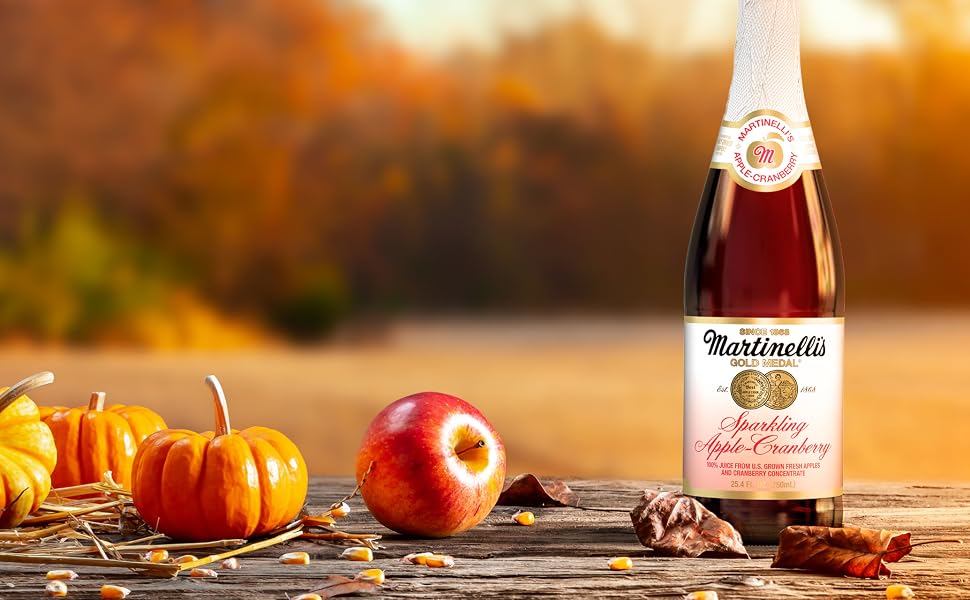
The sparkling cider followed a similar plan. Martinelli’s chose champagne style bottles for a non alcoholic apple drink, so it would feel like a fit for special moments.
It was still apple juice, of course.
But the look made it feel like something you would lift at midnight on New Year’s Eve.
That slight shift helped Martinelli’s stay in people’s minds.
Martinelli’s Did Not Need to Become a Giant Beverage Company
In business, it is easy to think that bigger is always the goal.
Martinelli’s takes a different path.
The firm has stayed close to what it knows. It sells apple juice, sparkling cider, and other fruit drinks. It has not gone after every big section on the shelf.
This steady approach seems to have paid off.
Recent figures suggest Martinelli’s is in around 25,000 stores across the United States. Its products are also in 38 countries. Sparkling cider is said to lead its group in the U.S. Apple-shaped bottles are also strong, coming in second in U.S. apple juice sales behind Mott’s.
These results matter. They show what a focused brand can do while it does not turn into a wide, grab-everything company.
Martinelli’s does not have to sell soda, sports drinks, energy drinks, or bottled water to count.
It just needs shoppers to spot the bottles and choose them again and again.
How Martinelli’s Reached an Estimated $500 Million Value
Martinelli’s is privately held. So there is no public share price that tells investors its value.
The $500 million number does not come from a reported deal. It comes from third party estimates.
Earlier coverage put 2025 revenue near $175 million. It also said revenue rose about 5% each year over the last five years. That same reporting pointed to an EBITDA margin around 17%. Using those inputs, the company may be worth close to $500 million.
But you have to separate two ideas.
A valuation of $500 million is not the same as having $500 million in cash. And $175 million in revenue does not mean $175 million in earnings.
What the estimate is showing is the potential value of the business. It reflects what its future income might amount to.
Even with that nuance, it highlights how much Martinelli’s has grown since the small cider business started in 1868.
The Family Has Kept Control
The revenue is not the main surprise in this story.
What stands out is who owns it.
Martinelli’s is still run by the same family that started it. Over time, that ownership has moved through several generations of the Martinelli family. Recent reporting says there are 23 family shareholders. That includes people from the fourth generation. It also notes that members of the fifth generation are expected to take on ownership later.
Keeping a business in the same family for that long is not easy.
Once you get past the first few decades, disagreements can show up. Some relatives may want to invest more, while others may want a different plan for leadership. There is also the question of timing. Should the company change hands someday, or should it stay private within the family? As the business grows, these issues can get harder to manage.
Martinelli’s has also drawn attention from private equity, it seems.
Still, the family kept saying no to offers, according to recent coverage. They chose to keep the business in family hands instead of taking a payout.
That choice points to what matters most to them.
For many investors, a company is mainly something to sell when the offer is strong. For the Martinelli family, it looks more like a long term home than just an asset.
Read this “Hot-Dog Heaven: Inside Trump’s Golf Getaways”
The Business Has Changed Without Losing Its Identity
Martinelli’s keeps doing well because it will not sit still.
It changes when it needs to.
During Prohibition, the company shifted away from hard cider and into non-alcoholic juice. Later, as tastes shifted, it started making new juice blends. In 2016, it put money into organic apple orchards. More recently, it returned to hard cider with its 1868 line.
Even with those moves, the core stays the same.
Apples.
That tie to apples is what holds everything together.
Shoppers do not have to start over each time the company makes a move. Martinelli’s can add something fresh while still keeping the look and feel it built over many years.
Still, getting that balance right is not easy.
TikTok Accidentally Introduced Martinelli’s to a New Generation
Something unexpected came up that the family never could have mapped out.
In 2020, Martinelli’s apple-juice bottle started popping up all over TikTok.
People tried biting the plastic and got a snap-like sound that reminded viewers of biting a real apple. Clip after clip moved fast, and a very old brand suddenly felt tied to younger tastes. Later, Martinelli’s pointed to the whole moment as a key hit on social media.
There is a clear takeaway here for business.
Martinelli’s did not have to overhaul its whole brand just to catch attention on TikTok. The product was already in stores and ready.
Online users just noticed a fun detail and kept sharing it.
For a business with 150 years behind it, that kind of luck matters. It let a new group meet the name without the company having to throw away what it already was.
The Risks Are Still Real
A $500 million estimated valuation does not mean the business is protected from the pressures facing food and beverage companies.
Apples are agricultural products. Weather, crop conditions and input costs can affect supply and pricing.
Packaging costs matter too. So do labor, transportation and energy expenses.
And consumer preferences are shifting. Shoppers are paying closer attention to sugar, ingredients and nutrition. Apple juice has a strong reputation, but it also competes with sparkling water, functional beverages, flavored drinks and dozens of other alternatives.
There is another risk that is harder to measure: staying interesting.
A heritage brand can become an advantage, but it can also become a limitation if younger consumers start viewing it as something their parents or grandparents bought.
Martinelli’s has managed to avoid that problem so far through packaging, product extensions and moments such as the TikTok surge.
There is no guarantee that the same formula will work forever.
What Martinelli’s Can Teach Other Family Businesses
The Martinelli story has a takeaway that reaches past cider.
Martinelli did not grow its worth by chasing novelty every year.
They made value by holding steady on what matters.
Yes, some things changed. The product kept improving. The look of the bottle shifted. The reach got wider. They moved into organic farming and used social platforms to connect. Still, the core promise stayed the same.
That steadiness can help a family-run company. When the brand is trusted, it becomes something people can hand down. The next group inherits more than a business. They inherit customer confidence.
There is a second point too. It is patience.
Martinelli has been building its name for over 150 years. It did not have to turn into a huge drink maker right away. It just had to keep its place long enough for what one generation put into the brand to pay off later.
That is hard to do now. Many companies are pushed to answer to results each quarter.
What Comes Next for Martinelli’s
Martinelli’s does not seem to need a big makeover.
Its tougher job is to keep what is already working.
The name is easy to spot. The bottle design stands out. The drinks are sold in many places. Customers who like it tend to keep coming back. There is also another factor that is hard to find now in many consumer product brands. The business is still owned by the same family and that has lasted for a long time.
The numbers help explain why people pay attention. The reported $175 million in yearly revenue and the possible $500 million value point to real financial strength.
Still, the best part of the Martinelli’s story is not the $500 million guess.
It is the small amount of change in the core idea.
Two brothers came to California. They saw an opening in apples. They started making cider. That was more than a century ago. Today, their descendants run the company.
The product did shift when Prohibition hit. Then later, newer generations changed how people drank it. And social media put it in front of many younger viewers in a way that no one planned.
Even with all of that, Martinelli’s kept coming back to the same points. Apples. A bottle that looks different. A family that plans over long stretches, not just for the next quarter.
Maybe that is the real reason the Martinelli’s business is valued so highly.
